
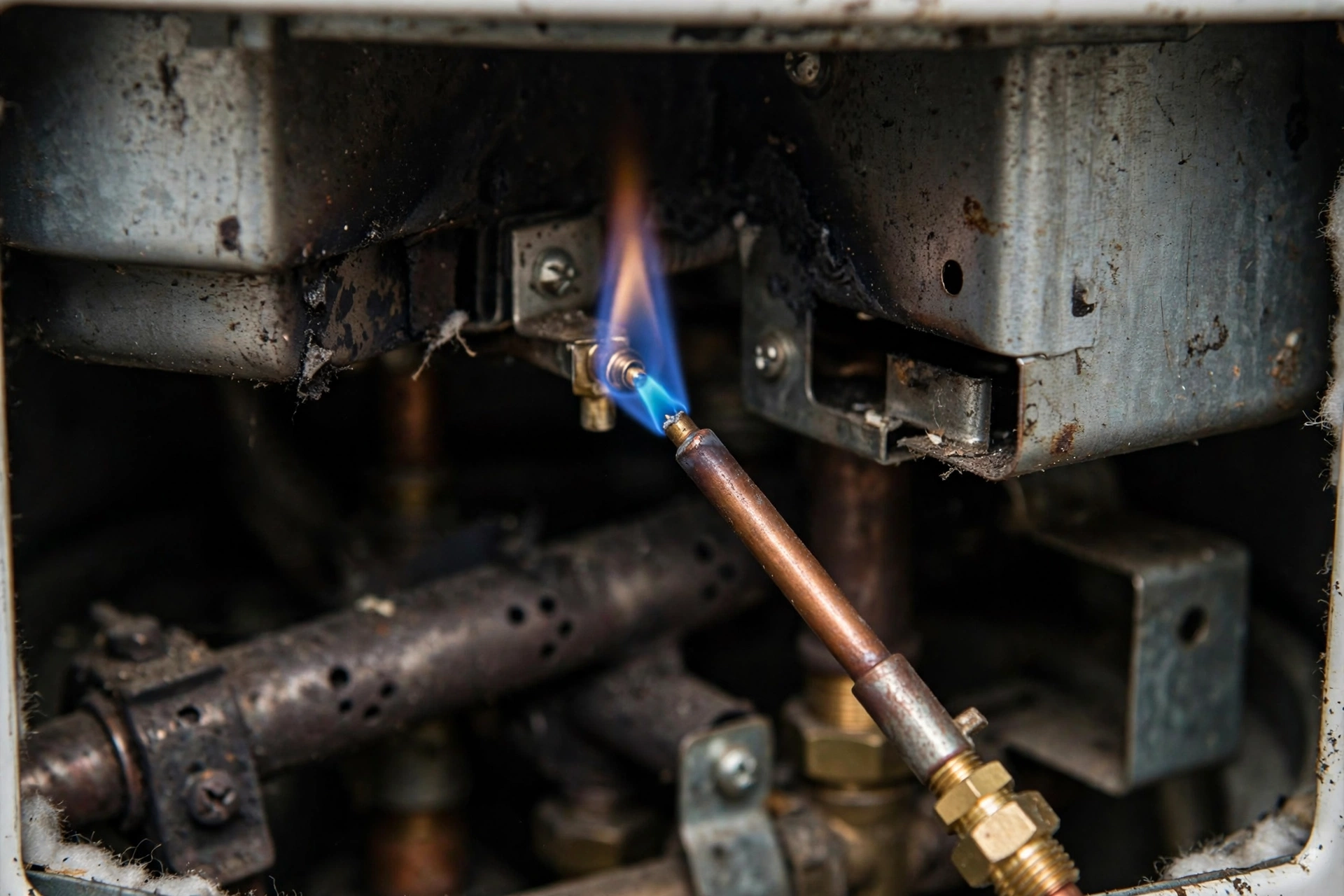
If your gas water heater's pilot light keeps going out — you relight it, it holds for a while, then dies again — the problem is rarely the flame itself. It is almost always the thermocouple, a draft, or a gas supply issue. This guide explains each cause, which checks are safe to do yourself, and where DIY must stop for safety.
What does the thermocouple do — and why does it fail?
Short answer: the thermocouple is a safety sensor, and it is the #1 cause of pilot problems. It sits in the pilot flame and generates a tiny electric current that holds the gas valve open. No flame → no current → gas shuts off. That is by design.
Thermocouples wear out. The classic symptom: the pilot lights fine when you hold the button down, but dies the moment you release it. That is the thermocouple failing to generate enough current to hold the valve. Causes include age (they typically last several years), corrosion on the connection, or a thermocouple that has shifted out of the flame. Replacement is inexpensive and is one of the most common gas water heater repairs we perform.
Can a draft blow out a pilot light?
Yes — and it is more common than people think. Pilot flames are small and vulnerable. Common draft sources in Lynnwood homes:
- Nearby vents, fans, or open windows creating cross-drafts through the utility area.
- A damaged or disconnected vent pipe causing downdrafts down the flue.
- Clothes dryers or range hoods in the same space competing for combustion air.
If the pilot goes out mainly on windy days or when the dryer runs, suspect a draft. Do not just keep relighting it — repeated outages from venting problems can indicate flue issues that also affect carbon monoxide exhaust. That deserves a professional look.
What about gas supply problems?
If gas is not reaching the pilot reliably, the flame will be weak, yellow, or intermittent before it dies. Possible causes:
- A partially closed or faulty gas shutoff valve.
- Low gas pressure — sometimes an issue when multiple gas appliances run simultaneously on an undersized line.
- A failing gas control valve on the water heater itself.
- A clogged pilot orifice — dust and debris narrow the tiny opening, starving the flame.
Gas supply diagnosis is strictly professional territory. If you suspect a gas issue — especially if you smell gas — stop, ventilate, leave the area, and call your gas utility, then a pro.
What is the thermal cutoff switch (and why does it trip)?
Modern gas water heaters (with FVIR — flammable vapor ignition resistance) have a thermal cutoff switch: a one-time or resettable safety that kills the pilot if the burner compartment overheats. The most common trip cause is a dust-choked flame arrestor screen at the bottom of the unit — it starves the burner of air, the compartment overheats, and the cutoff trips.
If your pilot died and will not relight at all, a tripped thermal cutoff is a strong suspect. Resetting it without finding the cause just buys time until it trips again. A technician cleans the arrestor, checks the cutoff, and verifies proper combustion air — the actual fix.
Which pilot light checks are safe to do yourself?
There is a short list of safe homeowner checks — and a hard line after it:
- Safe: Visually check whether the pilot is lit (sight glass or access panel). Follow the manufacturer's relighting instructions exactly — no more than two or three attempts.
- Safe: Check that the gas shutoff valve handle is parallel to the pipe (open). Note nearby drafts you can eliminate (close a window, keep the utility room door as normal).
- Safe: Look — don't touch — for obvious issues like a disconnected vent pipe or heavy dust around the base.
- Stop and call a pro: Any smell of gas. Pilot won't stay lit after a couple of tries. Anything involving disassembling the burner, adjusting gas pressure, or replacing parts. Call 8665723596.
Safety rule: if you smell gas — rotten-egg odor — do not relight anything. Do not flip switches. Leave the house and call your gas utility from outside.
When should you call a professional for pilot problems?
Call when the pilot will not stay lit after two or three careful relight attempts, when outages keep recurring, or when you suspect venting, gas supply, or thermal cutoff issues. These are quick, affordable professional repairs — a thermocouple replacement is one of the fastest fixes we do.
The Heater Medics handles gas water heater repair and no hot water calls across Lynnwood every day, with same-day service when you call before noon at 8665723596.
Frequently Asked Questions
Why does my pilot light go out when I release the button? That is the classic bad-thermocouple symptom. The thermocouple is not generating enough current from the flame to hold the gas valve open. Replacement is a quick, inexpensive repair.
Can I replace a thermocouple myself? It is a low-cost part, but it involves working inside a gas appliance. For safety and correct positioning in the flame, most homeowners are better off having a professional do it.
How many times should I try relighting a pilot? Follow the manufacturer's instructions and stop after two or three attempts. Repeated failures mean an underlying problem — thermocouple, draft, gas supply, or thermal cutoff — that needs diagnosis.
What does it mean if the pilot flame is yellow instead of blue? A healthy pilot flame is blue. A weak yellow flame suggests a dirty pilot orifice or combustion air problem, both of which can cause the pilot to go out.
Can wind blow out a water heater pilot light? Yes. Downdrafts through a damaged or disconnected vent, or cross-drafts in the utility area, can extinguish a pilot. Recurring wind-related outages warrant a venting inspection.
Is it dangerous if my pilot light keeps going out? The thermocouple safety shuts off gas when the flame dies, which is by design. But repeated outages can signal venting or gas issues — and any gas smell means leave the house and call your gas utility immediately.