
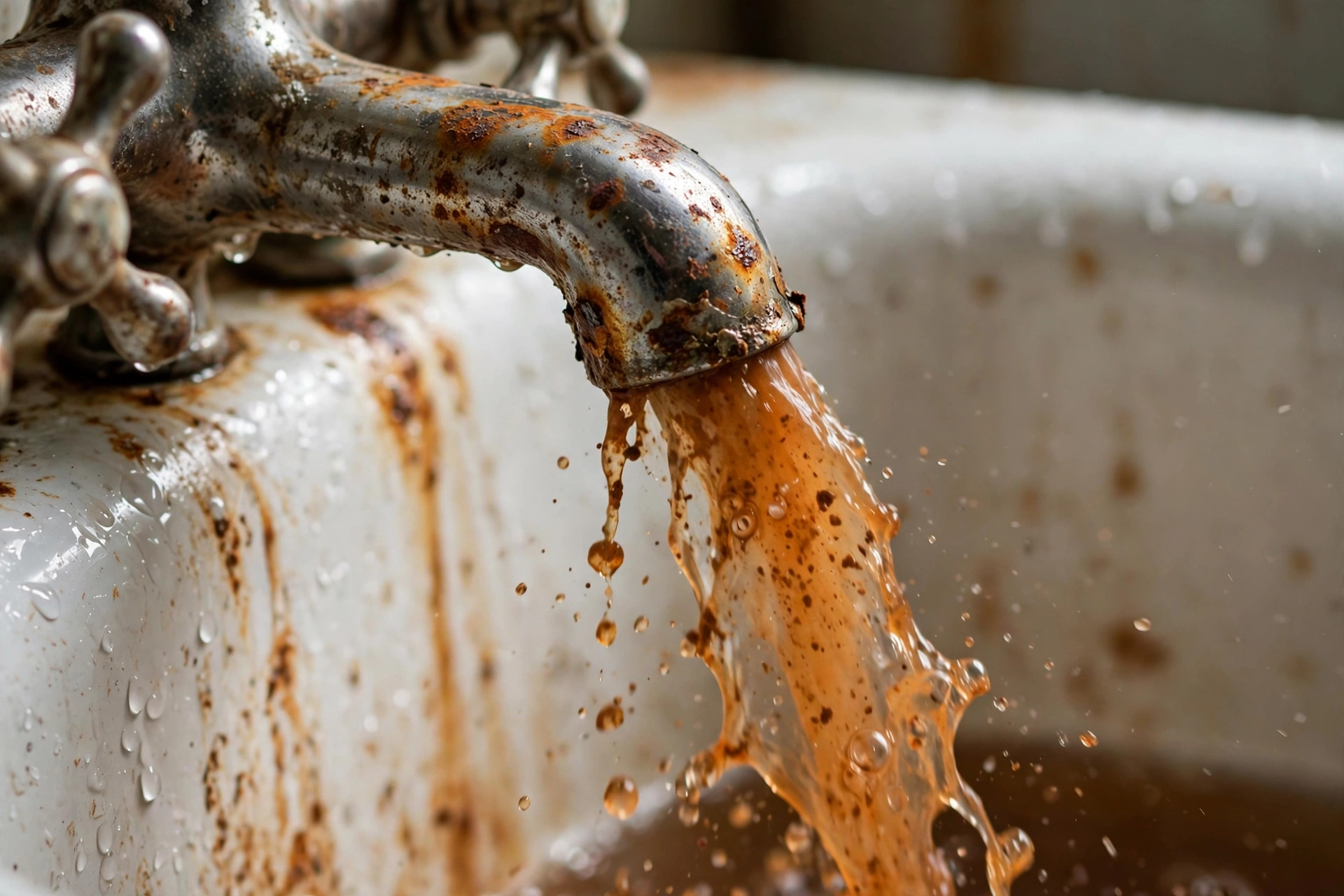
If your hot water runs rusty — or smells like rotten eggs — your water heater is sending you a message. Rust and odor are two completely different problems with different causes and different fixes, so the first step is figuring out which one you have. This guide shows you how to tell them apart and what repair does about each.
Why is my hot water rusty? (But my cold water is clear)
Short answer: if only the hot water is discolored, the problem is in the water heater — almost always the anode rod or the tank itself. Run this test: fill one glass from the hot tap and one from the cold tap. Cold clear + hot rusty = water heater issue. Both rusty = a broader plumbing or supply issue.
Inside every tank water heater is an anode rod — a magnesium or aluminum rod that corrodes instead of the steel tank. It is sacrificial by design. When the rod is depleted, corrosion attacks the tank lining and then the steel, and rust starts showing up in your hot water. At this stage, replacing the anode rod can still save the tank — which is why catching rust early matters.
The point of no return: rust plus moisture or weeping around the tank base. That means the steel itself is compromised, and no part replacement will fix it. Rust alone, caught early, is very often repairable. Call 8665723596 at the first sign — the difference between a rod replacement and a dead tank is often just timing.
What does the anode rod actually do?
Think of the anode rod as a lightning rod for corrosion. Through a simple electrochemical reaction, corrosive elements in the water attack the rod's magnesium or aluminum instead of the tank's steel. Rods typically last 3 to 5 years in Lynnwood water — less with softeners or heavy use.
Most homeowners never know the rod exists until rust appears. But a technician can check rod condition during a service visit, and replacing a depleted rod is one of the highest-value repairs in water heating — a modest part that can add years to a sound tank. If your unit is 5+ years old and has never had the rod checked, it is overdue.
Why does my hot water smell like rotten eggs?
Short answer: sulfate-reducing bacteria reacting with the anode rod. This is a completely different problem from rust. The rotten-egg smell is hydrogen sulfide gas, produced when harmless bacteria in the water feed on sulfates and react with a magnesium anode rod.
The telltale test, again, is hot vs. cold: smell only in hot water = water heater issue. Smell in both = the source water or well. Bacteria-related odor is more common in homes with well water, but it happens on municipal supplies too — and it tends to come and go, often worse after the heater sits unused (like after a vacation).
Fixes a professional will consider: replacing a magnesium anode rod with an aluminum-zinc alloy rod (less reactive with bacteria), or a powered anode rod that prevents the reaction entirely. What does not reliably work long-term: home bleach flushes, which treat the symptom for a few weeks. If odor keeps returning, the anode chemistry is the real fix — call 8665723596.
Is smelly or rusty water dangerous?
For most municipal-water homes in Lynnwood, both are nuisance problems, not health emergencies. Hydrogen sulfide at household levels smells terrible well before it reaches harmful concentrations, and the bacteria involved are not the harmful kind. Rust is unpleasant and stains fixtures, but small amounts of iron are not a health hazard.
That said, “not dangerous” is not “ignore it.” Rust signals active tank corrosion — a countdown to tank failure. And any sudden change in water quality deserves a professional look, because the same symptoms can occasionally mask other issues. When in doubt, a quick diagnosis settles it.
How does repair fix rusty or smelly water?
It depends on which problem you have — which is why the hot-vs-cold test matters:
- Rusty hot water, sound tank: Anode rod replacement, sometimes combined with flushing sediment. This is a true repair that extends tank life.
- Rusty hot water, weeping tank: The tank is done. Honest advice here saves you from throwing parts at a failed tank.
- Rotten-egg smell, hot only: Anode rod upgrade (aluminum-zinc or powered rod) to stop the bacterial reaction at its source.
- Smell in both hot and cold: The issue is upstream of the heater — a water treatment question, not a water heater repair. We will tell you that straight rather than sell you a heater fix.
If you are also seeing water around the unit, check our leaking water heater repair guide — corrosion and leaks often travel together. And if hot water has stopped entirely, see no hot water repair.
Frequently Asked Questions
Why is only my hot water rusty? When cold water runs clear but hot water is discolored, the problem is inside the water heater — usually a depleted anode rod or early tank corrosion. Both are diagnosable and often repairable if caught early.
What is an anode rod and when should it be replaced? The anode rod is a sacrificial magnesium or aluminum rod that corrodes instead of your tank. It typically lasts 3–5 years. Replacing a depleted rod is one of the best-value repairs for extending tank life.
Why does my hot water smell like rotten eggs? Hydrogen sulfide gas from sulfate-reducing bacteria reacting with a magnesium anode rod. It affects hot water only and is usually fixed by upgrading to an aluminum-zinc or powered anode rod.
Is rotten-egg-smelling water safe? At typical household levels it is a nuisance odor, not a health hazard. But persistent odor deserves a professional diagnosis to confirm the cause and fix it at the source.
Can rusty water be fixed without replacing the heater? Often yes — if the tank itself is sound, anode rod replacement plus flushing resolves it. If the tank is weeping or rusted through, replacement is the honest answer.
Does a water softener affect the anode rod? Yes — softened water is more aggressive and can deplete anode rods faster. Homes with softeners should have the rod checked more often.