
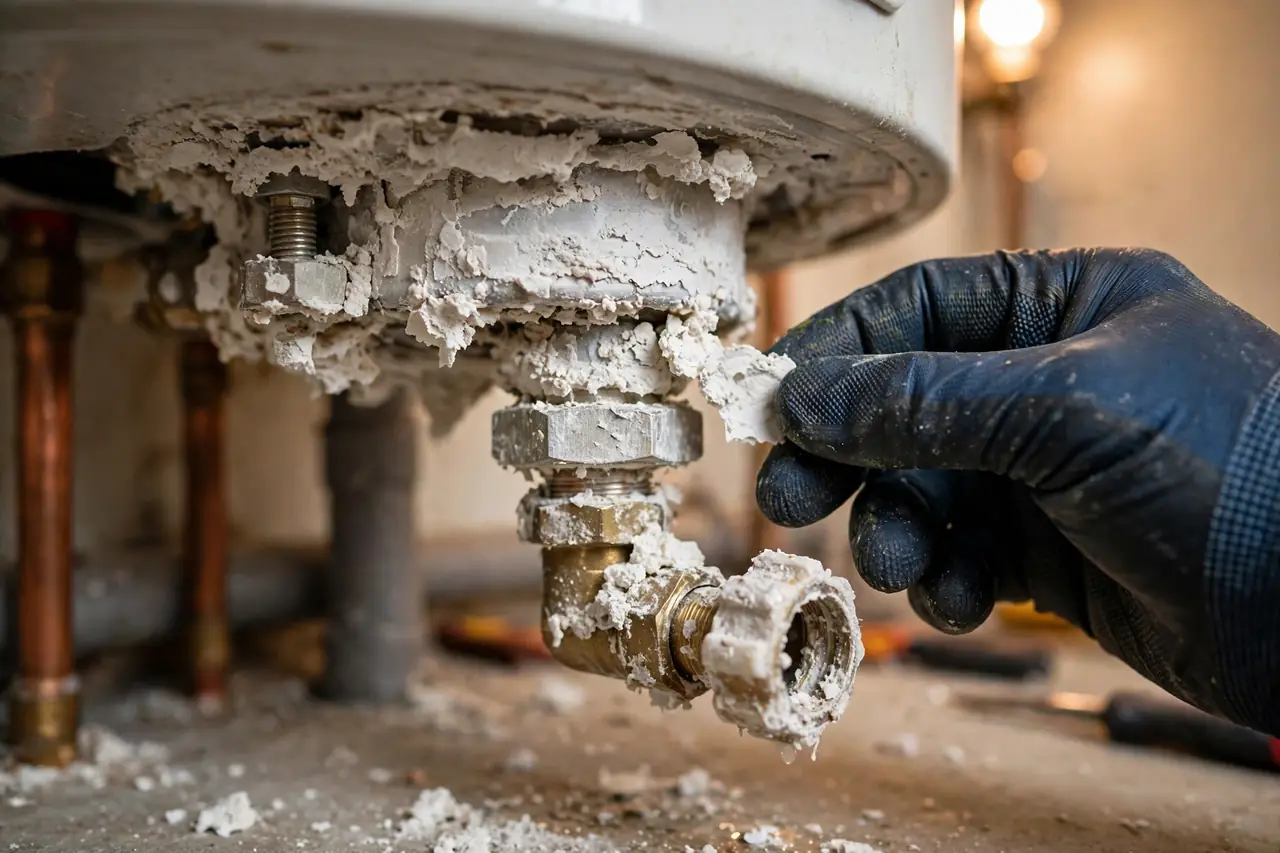
White flakes in the kettle, chalky residue around faucets, and a water heater that rumbles like a kettle coming to a boil — these are the calling cards of hard water. Lynnwood's municipal supply is softer than the water in much of the country, which surprises many homeowners when scale still shows up in their water heater. The explanation is simple: heating water concentrates minerals, and over years of daily use even moderate mineral content leaves sediment and scale behind. This guide explains how that happens, what it does to tank and tankless units, and which repairs and descaling options actually fix it.
Is Lynnwood's water hard?
Compared with the famously hard water of the Midwest and Southwest, Lynnwood's municipal supply sits on the softer side of the scale. But "softer" does not mean mineral-free. All natural water carries dissolved calcium and magnesium, and a water heater processes thousands of gallons a year, heating every gallon. Each heating cycle leaves a tiny mineral residue behind, and those residues accumulate. After several years, even moderate water produces a meaningful layer of sediment in a tank or scale in a tankless heat exchanger.
Some Lynnwood homes see more mineral trouble than others. Homes on well water or with older galvanized plumbing often deal with heavier deposits. Homes with high hot-water demand — large families, rental units, home businesses — cycle more water through the heater and build scale faster. And homes where the heater has gone years without a flush or descaling simply have had more time for deposits to grow. If you are unsure how your home compares, the symptoms below are a more reliable guide than any general hardness rating.
How sediment and scale form
Calcium and magnesium stay dissolved in cold water, but heat changes the chemistry. As water is heated, these minerals precipitate out as solid particles — the same process that furs up a kettle. In a tank water heater, the particles settle to the bottom of the tank and bake into a crusty sediment layer over the burner or lower element. In a tankless unit, there is no tank for sediment to settle in; instead, minerals plate directly onto the narrow passages of the heat exchanger, narrowing them like plaque in an artery.
Two things make the problem worse over time. First, sediment insulates: the burner or element must heat through a mineral blanket before the water gets hot, so heating cycles get longer and the metal underneath runs hotter than designed. Second, the process feeds on itself — hotter metal surfaces precipitate minerals faster, so a scaled unit scales faster still. That is why a heater that was quiet for years can start rumbling suddenly: the sediment layer has finally grown thick enough to trap steam bubbles beneath it.
Signs of hard-water damage
Hard-water trouble rarely announces itself all at once. Watch for these symptoms, especially in combination:
- Popping, rumbling, or kettling noises: Steam bubbles escaping through sediment on the tank floor. Our guide to water heater noises explains each sound in detail.
- Running out of hot water sooner: Sediment displaces water in the tank and insulates the heating surface, so usable capacity and recovery both drop.
- Longer heat-up times and higher energy use: The heater works longer to deliver the same hot water because heat must pass through the mineral layer.
- White flakes or grit at taps: Chalky particles in aerators, showerheads, or the bathtub are scale breaking loose and traveling through the pipes.
- Reduced hot-water pressure: Scale narrowing pipes, valves, or a tankless heat exchanger restricts flow, sometimes noticeably at a single fixture first.
- Tankless error codes or temperature swings: A scaled heat exchanger overheats in spots and under-delivers elsewhere, which the unit reports as faults or shows as water that runs hot, then cold, then hot again.
One symptom deserves a careful distinction: white or chalky flakes point to mineral scale, while brown, rusty, or bad-smelling water points to corrosion or anode trouble instead. If your water is discolored or smells off, see our guide to rusty or smelly hot water — the fix is different.
What hard water does to a tank unit
In a tank unit, sediment attacks from the bottom up. The layer on the tank floor forces the burner or lower element to run hotter, which stresses the tank lining and accelerates wear at the hottest point of the tank. On gas units, sediment sitting above the burner can cause uneven heating and rumbling; on electric units, sediment buries the lower element, which then overheats and fails early — a common reason for heating element repairs in homes with mineral-rich water.
Sediment also hides other problems. It can mask a slow leak at the tank base, trap moisture against fittings, and make drain valves clog when a flush is finally attempted. And because the thermostat reads water temperature above the sediment layer, a heavily sedimented tank can cycle oddly — overheating at the bottom while the top reads normal. Left alone for years, sediment is one of the most common reasons a tank unit dies before its expected service life.
What hard water does to a tankless unit
Tankless units are more sensitive to scale than tanks, because their heat exchangers are compact and their water passages are narrow. Even a thin layer of scale measurably reduces heat transfer, so the unit fires harder and longer to hit the same set temperature. As scale thickens, flow drops, outlet temperature fluctuates, and the unit may throw error codes or shut down on overheat protection. In hard-water conditions, manufacturers and technicians alike treat descaling as routine care for tankless units — not an optional extra — and a neglected tankless unit in a mineral-heavy home can lose years of service life to scale alone.
The inlet water filter is the tankless unit's first line of defense, and it deserves attention too. A clogged filter starves the unit of flow and mimics scale symptoms — whistling, temperature swings, and low pressure — even when the heat exchanger itself is clean. If your tankless unit is acting up, the filter is always worth checking before assuming the worst. Our tankless water heater repair page covers how filter, scale, and sensor faults are told apart during a diagnostic visit.
Repair and descaling options
The right fix depends on what the minerals have already damaged. A flush drains accumulated sediment from a tank unit through the drain valve, restoring capacity and quieting rumbling — provided the drain valve itself is not clogged with scale, in which case the valve may need service first. A tankless descaling service circulates a descaling solution through the heat exchanger to dissolve scale from the passages, followed by a filter cleaning and a flow check. Both are straightforward repair services, and both usually produce an immediate, noticeable improvement in noise, recovery time, and temperature stability.
When scale has already caused component damage, the repair goes further. A buried lower element that has burned out is replaced, and a spent anode rod — which scale and sediment wear down faster — is replaced so the tank keeps its corrosion protection; see our anode rod replacement page for how that works. A scaled heat exchanger that has overheated repeatedly may need deeper service or, in severe cases, may not be recoverable — a technician can tell you honestly which side of that line your unit is on. If your unit has stopped delivering hot water altogether, our no hot water repair page walks through the checks that come first.
One caution: do not try to descale a gas unit's burner area or open a tankless heat exchanger yourself. Descaling involves hot water, pressurized lines, and — on gas units — components that must be reassembled and vented correctly. A botched descaling can cause leaks or, on a gas unit, unsafe combustion. If you ever smell gas around the unit, leave the home and call your gas utility or emergency services from outside; never attempt gas repairs yourself.
Preventing scale buildup
Scale cannot be eliminated entirely, but it can be kept to a level that does not shorten the unit's life. Periodic flushing for tank units and periodic descaling for tankless units are the core habits — the interval depends on your water and usage, and a technician can suggest a rhythm after seeing how much sediment your unit produces. Keeping the thermostat at a sensible setting helps too: hotter water precipitates minerals faster, so running the unit hotter than you need accelerates scale for no benefit.
Whole-home water softening is the other option, and it is worth discussing with a water treatment professional if your home shows heavy scale everywhere — faucets, showerheads, appliances, and the heater together. A softener changes the water chemistry for the whole house, which reduces scale in everything downstream, but it is a separate system with its own upkeep, so get advice specific to your home's water rather than buying on a sales pitch. For tankless owners, the simplest preventive step costs nothing: check and clean the inlet filter on a regular schedule, since a clean filter keeps flow up and scale symptoms down.
When to call for help
Call promptly if rumbling is new or worsening, if hot water runs out much sooner than it used to, if a tankless unit is throwing error codes or swinging in temperature, or if you see water around the base of the tank — sediment-related overheating can precede leaks. And treat any gas smell as an emergency: leave the home and call your gas utility or emergency services first, then call us once the home is cleared.
For anything less urgent, a diagnostic visit settles the question quickly: how much sediment or scale is present, whether a flush or descaling will restore performance, and whether any component has already been damaged. The Heater Medics serves all of Lynnwood, including Meadowdale, Martha Lake, Cedar Valley, and North Lynnwood — call 8665723596 and describe the symptoms, and we will tell you whether a flush, a descaling, or a component repair is the right next step.
Frequently Asked Questions
Is Lynnwood's water hard? Lynnwood's municipal supply is on the softer side compared with much of the country, but it still carries dissolved minerals, and heating concentrates them. Over years of use, even moderate water leaves sediment and scale in a water heater.
Can soft water still cause sediment? Yes. Any water with dissolved calcium and magnesium leaves residue when heated, and a heater processes thousands of gallons a year. Soft water simply builds deposits more slowly than hard water.
How often should a tankless unit be descaled? It depends on your water and usage — homes with heavier mineral content or high demand need it more often. A technician can recommend an interval after seeing how much scale your unit produces.
Are white flakes in the water dangerous? White, chalky flakes are mineral scale, not contamination, and are not a health hazard on their own. They are, however, a sign that scale is building up in your heater and plumbing and deserves attention.
Does scale shorten a water heater's life? Yes, when left unchecked. Sediment overheats tank floors and elements, and scale narrows tankless heat exchangers, both of which accelerate wear and can cut years off a unit's service life.
Can scale damage be fixed without replacing the unit? In most cases, yes. Flushing, descaling, filter cleaning, and replacing damaged elements or anode rods restore most scaled units. Only severe, long-neglected damage — such as a heat exchanger damaged by repeated overheating — may not be recoverable.