
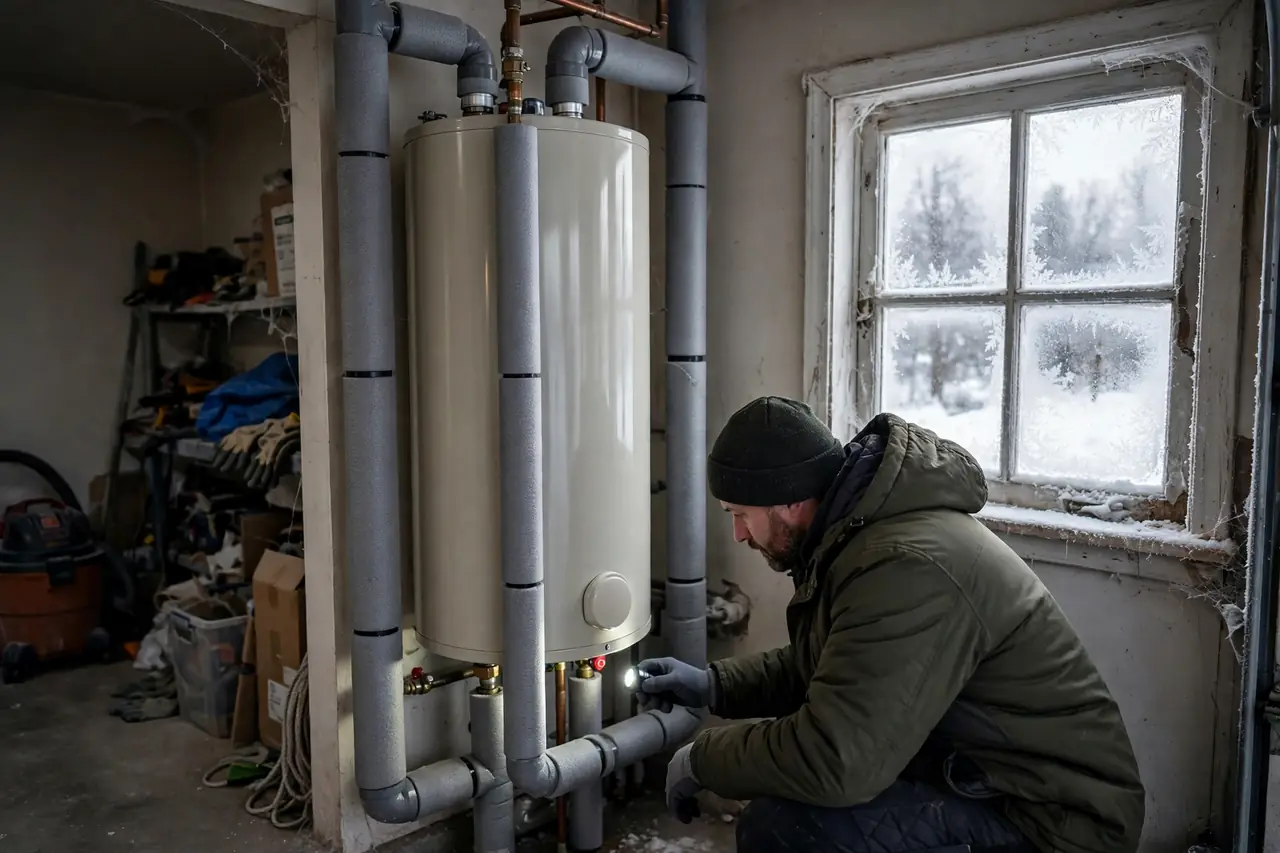
Winter in Lynnwood does not bring the deep freezes of the upper Midwest, but it brings exactly the conditions that strain water heaters: cold incoming water, long dark evenings of hot showers and laundry, holiday guests doubling hot water use, and the occasional hard freeze that catches exposed pipes by surprise. A water heater that coped fine in September can start struggling in January — running longer, recovering slower, and, in the worst case, failing on the coldest weekend of the year. This guide covers how cold weather strains your system, how to protect pipes and garage units from freezing, what winter does to sediment and demand, and the warning signs that mean it is time to call for repair.
Why Lynnwood winters are hard on water heaters
The biggest winter strain is invisible: the temperature of the water coming into your home. In summer, incoming water may arrive at a comfortable temperature, so your heater only needs to raise it a moderate amount. In winter, that same water arrives much colder, and the heater must work harder and longer for every shower, load of laundry, and sink of dishes. That means longer burner or element cycles, more wear on components, and slower recovery — the tank takes longer to reheat after a big draw. Households often notice this as hot water running out faster in winter, or the second shower of the morning turning lukewarm. That is usually a capacity and recovery issue, not necessarily a fault, but it is also when marginal components — a tired thermostat, a scaled element, a burner struggling with sediment — start to show their age.
Demand rises at the same time. Shorter days and colder weather mean more hot showers, more laundry, and more time indoors. Holiday visits add guests, and guests add showers. A household that comfortably managed on its tank's capacity in autumn can find winter demand outrunning recovery, especially in the morning rush. Add Lynnwood's damp cold, which keeps garages and unheated utility spaces chilly around the clock, and units in those spaces lose more standby heat and work harder still. None of this means winter is a reason to panic — it means winter is the season when small problems become noticeable, and when a check or repair done early saves a cold-water emergency later.
Protecting pipes from freezing
Frozen pipes are the most common winter water heater emergency, and they often start away from the heater itself. When water in a pipe freezes, it expands and can split the pipe; the damage may only reveal itself when the ice thaws and water pours out. The pipes most at risk are the ones in cold places: exterior walls, unheated garages, crawl spaces, attics, and anywhere a pipe runs near a draft or an outside wall. Hot water pipes are not immune — they freeze too, and a frozen hot water line can leave you without hot water even though the heater itself is fine.
The most effective protection is insulation. Foam pipe sleeves on exposed hot and cold lines in garages, crawl spaces, and along exterior walls slow heat loss enough to get through most Lynnwood cold snaps. Pay special attention to pipes near the water heater itself, where a short exposed run in a cold garage is easy to miss. Seal drafts around the pipes too — gaps where pipes pass through walls let cold air blow directly onto them, and a little caulk or foam sealant at those entry points makes a real difference. Keep garage doors closed during cold weather, and do not leave a garage water heater's room open to the wind on a freezing night.
Inside the house, a few habits help on the coldest nights. Open cabinet doors under sinks on exterior walls so warm room air reaches the pipes. If a hard freeze is forecast and you have a pipe that has frozen before, letting a faucet fed by that pipe drip slowly overnight keeps water moving and relieves pressure buildup — this is a stopgap for extreme nights, not a permanent fix for an uninsulated pipe. Most importantly, know where your main water shutoff is before you need it. If a pipe does burst, shutting off the water quickly limits damage while you call for help. If you find a frozen pipe, do not use an open flame to thaw it, and do not force the water heater to compensate — call a technician, especially if the freeze is near the heater or you cannot find the frozen section.
Garage and outdoor units need extra attention
Many Lynnwood homes keep their water heater in the garage, and that is where winter hits hardest. An unheated garage can sit near outdoor temperature for days during a cold snap, and a water heater there faces cold air on every side, cold incoming water, and pipes that may run along cold walls. Units in Meadowdale, Alderwood Manor, and other Lynnwood neighborhoods with older garages often have little insulation around the utility corner, which makes the problem worse.
Start with the pipes, not the tank: insulate the hot and cold lines running to and from the unit, including the short runs that are easy to overlook. Keep the area around the unit clear so air can circulate and so you can spot leaks early — boxes stacked against a heater hide drips and block access. Never block the unit's vents or combustion air openings to “keep it warm”; a gas unit needs that air to burn safely, and blocking it can cause dangerous combustion problems, including carbon monoxide risk. Read our guide on gas water heater carbon monoxide safety for why ventilation matters. Likewise, do not drape blankets or insulation over the unit itself unless the product is specifically designed for your model and fitted according to its instructions — improvised covers can block vents and create fire hazards.
For tankless units mounted on an exterior wall or in a garage, winter brings an extra concern: the unit's own freeze protection only works while it has power. A power outage during a freeze can leave an outdoor or garage tankless unit unprotected, so if you lose power in freezing weather, check the unit once power returns and watch for leaks or error codes before assuming all is well. If a tankless unit shows an error code after a cold snap, our tankless water heater repair page explains what those codes can mean. Keep the area around an outdoor unit clear of snow, ice, and debris, and make sure its vent terminal is not blocked by snow buildup.
Sediment and demand: the winter double hit
Winter is when sediment problems announce themselves. Sediment is the mineral residue left behind as water is heated, and it settles on the bottom of a tank or coats a tankless heat exchanger over time. It acts like insulation between the burner or element and the water, forcing longer heating cycles to produce the same hot water. In summer, when demand is lower and incoming water is warmer, a moderately sedimented tank may still keep up. In winter, with cold incoming water and heavy demand, the same tank runs out of hot water faster, makes popping or rumbling noises as trapped water boils under the sediment layer, and heats unevenly.
If your hot water runs out noticeably faster than it did last winter, or you hear popping or rumbling from the tank, sediment is a likely culprit. Our guide on water heater noises explains what each sound means. A technician can assess sediment level and flush the tank, which often restores recovery and quiets the unit. For tankless units, winter is a good time to have scale checked as well — hard water deposits narrow the heat exchanger passages, and cold-weather demand makes the restriction obvious. Do not attempt to open or drain a water heater yourself if you are unsure of the procedure; scalding water and pressure are real hazards, and a wrong step can damage the unit.
Demand management helps too. Spacing out showers, laundry, and dishwasher runs during the morning peak gives the tank time to recover between draws, and it costs nothing. If your household has grown — a new family member, a rental unit, or regular guests — and winter shortages are now routine rather than occasional, that is useful information for a technician: it may mean the unit is simply undersized for current demand, or that a component such as a thermostat is no longer holding temperature properly. Either way, a diagnosis beats guessing, and it beats living with lukewarm showers all winter.
Warning signs to watch all winter
Winter problems rarely arrive without warning. Watch for these signs, and act on them early rather than hoping they improve when spring arrives:
- No hot water or water that runs out much faster than usual. Check whether the issue affects the whole house or one tap, and whether it started suddenly or gradually — that detail helps a technician diagnose it.
- Fluctuating temperatures. Water that swings hot and cold during a shower can point to a thermostat problem, sediment, or a failing heating element.
- New noises. Popping, rumbling, or banging that appears or worsens in winter often means sediment is building up under heavier use.
- Leaks or damp patches. Any water around the base of the unit, on nearby pipes, or on the garage floor deserves same-day attention in winter — a small leak can worsen quickly, and water near a cold floor can freeze and spread damage.
- Discolored or rusty hot water. Rusty water from hot taps only (cold taps clear) often points to corrosion inside the tank, which winter demand can accelerate.
- A pilot light that keeps going out. Cold drafts, venting problems, and worn gas components all show up more in winter. See our guide on a pilot light that keeps going out for what to check.
- Unusual smells near a gas unit. Any gas smell is an emergency: leave the home and call your gas utility. Soot marks or a yellow burner flame are also reasons to call promptly.
A single mild symptom — slightly shorter hot water in the morning peak — may just be winter demand. Several symptoms together, or any symptom that worsens week by week, means the unit needs attention. Before you call, note whether the problem affects all taps or just one, and when it started — those details help a technician diagnose the cause faster.
When to call for repair
Call promptly — the same day — if you have no hot water in cold weather, any leak around the unit or its pipes, a gas smell, soot marks, or a carbon monoxide alarm. These are not “wait until spring” problems: no hot water in a freeze is a household emergency, leaks cause damage that compounds daily, and gas or carbon monoxide concerns are safety emergencies where you should leave the home and call 911 or your gas utility first. For less urgent winter issues — shorter hot water supply, new noises, or fluctuating temperatures — schedule a visit soon rather than waiting, because winter demand will keep exposing the weakness and a small repair caught early is usually simpler than one left until failure. The Heater Medics offers 24/7 emergency water heater repair across Lynnwood, so a weekend freeze or a midnight failure does not have to wait until Monday.
When you call, a few details help enormously: when the problem started, whether it affects all taps or one, any noises or smells, and where the unit sits (garage, basement, utility closet). A technician will check the unit, its pipes, and its venting, diagnose the cause, and explain the repair before starting work. If the unit has reached the point where repair no longer makes sense, you will hear that honestly, with your options explained clearly — including what would be involved in a new unit — so you can make an informed decision rather than being pushed into one.
A simple winter checklist for Lynnwood homes
Run through this list before the first hard freeze, and again in midwinter:
- Insulate exposed pipes in the garage, crawl space, and along exterior walls, including the runs near the water heater.
- Seal drafts where pipes pass through walls, and keep garage doors closed during cold snaps.
- Open cabinet doors under sinks on exterior walls on the coldest nights.
- Know where your main water shutoff is, and make sure it turns freely.
- Keep the area around the water heater clear, vents unblocked, and the floor dry and visible so leaks show early.
- Test your carbon monoxide detectors, and check the expiry date on each one.
- Note any change in hot water supply, noises, or water color — and call sooner rather than later if a change persists.
Winter does not have to mean cold showers or burst pipes. Most winter water heater trouble comes from a handful of causes — cold incoming water, frozen or uninsulated pipes, sediment under heavy demand, and components that were already tired when the cold arrived — and all of them are easier to handle when caught early. The Heater Medics serves Lynnwood neighborhoods including Alderwood Manor, Meadowdale, Martha Lake, Lake Serene, and North Lynnwood. Call (866) 572-3596 — we are at 2250 186th St SW #109, Lynnwood, WA 98037, open Mon–Fri 7AM–7PM and Sat 8AM–4PM, with 24/7 emergency service. A winter check now is a small step; a failed heater in a January freeze is not.